Hip Mobility for Strength Workouts: How Better Movement Can Improve Your Squat, Training and Performance
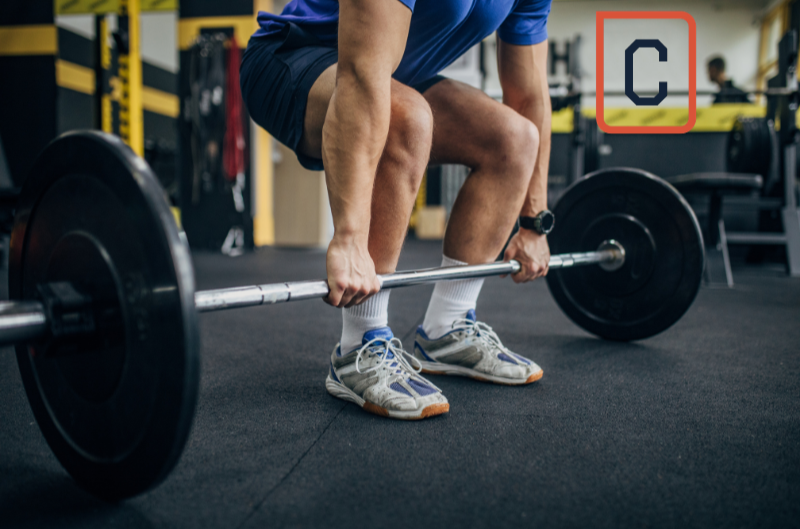
If your hips feel tight during squats, deadlifts or lunges, your first instinct may be to stretch more.
But hip mobility for strength workouts is more complicated than simply becoming more flexible.
Effective lifting requires enough hip range of motion to perform the exercise, but it also requires strength, stability and control within that range. Your individual anatomy, lifting technique and training history can also influence how your squat or deadlift looks.
At Catalyst Health in Toronto, we work with lifters and active individuals who want to move better, train with less discomfort and continue progressing in the gym.
Here's what you should know about hip mobility—and when "tight hips" may be telling you something more.
Why Is Hip Mobility Important for Lifters?
The hip is a ball-and-socket joint capable of movement in several directions.
Squats, deadlifts, split squats and lunges require different combinations of:
Hip flexion
Hip extension
Internal rotation
External rotation
Abduction and adduction
You don't need exceptional flexibility to lift well. You need enough usable range of motion for the movement you're trying to perform.
When that range is limited—or you can't adequately control it—you may compensate elsewhere.
For example, during a squat you might notice:
Difficulty reaching your desired depth
Heels lifting from the floor
Shifting toward one side
Excessive trunk lean
Pinching at the front of the hip
Difficulty maintaining a comfortable stance
However, these signs don't automatically mean the hips are the problem. Ankle mobility, trunk control, technique and individual anatomy can all influence squat mechanics.
That's why assessment matters.
Why Do Lifters Feel Like They Have Tight Hips?
"Tight hips" describes a sensation, not necessarily a diagnosis.
Several factors can contribute.
1. Limited Hip Range of Motion
Some lifters genuinely have restrictions in hip flexion or rotation that affect certain exercises.
This may be related to muscular stiffness, previous injuries or other factors.
2. Individual Hip Anatomy
Not everyone is built to squat the same way.
Differences in the structure and orientation of the hip joint can influence which stance width, toe angle and squat depth feel most natural.
Trying to force every lifter into an identical squat position can therefore be counterproductive.
3. Strength and Control
Sometimes you can achieve a position passively but struggle to control it while holding a barbell.
In this situation, stretching alone may not solve the problem.
Building strength throughout the available range can be more valuable.
4. Training Load
High-volume squatting, deadlifting, running or other activities can temporarily leave the hips feeling stiff or fatigued.
Your overall training volume and recovery should therefore be considered alongside mobility.
5. Previous Injury
Previous hip, groin, lower-back or lower-extremity injuries may influence how you move during training.
A qualified healthcare professional can help determine whether your perceived mobility restriction requires treatment, exercise—or simply a change in programming.
Hip Mobility for Squats
The squat is often where lifters first notice limited mobility.
A good squat doesn't have one universal appearance. Your ideal stance depends partly on your body proportions, hip anatomy, goals and the type of squat you're performing.
Instead of chasing a textbook position, ask:
Can I perform the movement through the range I need with good control and without significant pain?
If the answer is no, an assessment can help determine whether the limiting factor is:
Hip mobility
Ankle mobility
Strength
Motor control
Technique
Pain
Exercise selection
This is considerably more useful than simply being told to "stretch your hips."
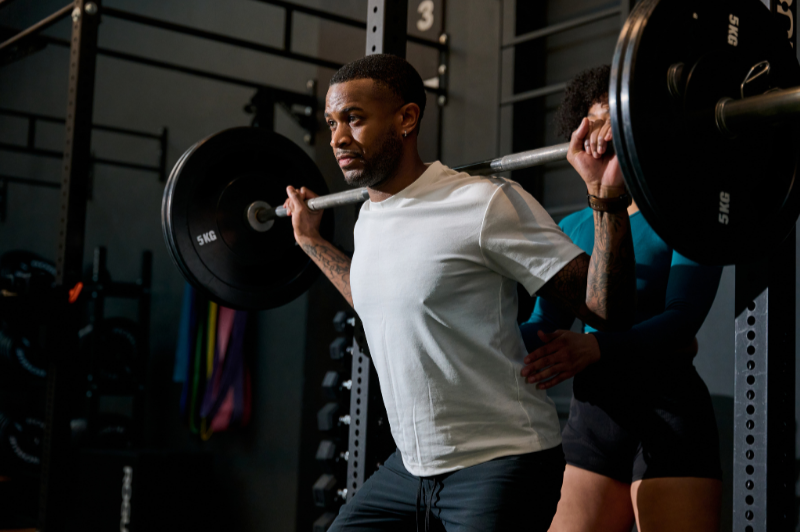
Hip Mobility for Deadlifts
Deadlifts require a different mobility profile than deep squats.
For most lifters, the goal isn't maximum flexibility. It's achieving a strong hip-hinge position while maintaining control of the trunk and generating force through the hips.
If you struggle to get into your starting position, possible contributors include mobility, technique, anthropometrics and the deadlift variation you're using.
For example, some people may feel more comfortable using a trap bar or sumo stance than a conventional deadlift.
Exercise selection should fit the individual—not the other way around.
Should Lifters Stretch Before Training?
Static stretching isn't necessarily bad, but spending 20 minutes stretching before every workout isn't automatically the best solution either.
A more useful warm-up typically progresses from general movement to movements specific to the session.
For a lower-body workout, this might include:
A few minutes of general movement
Dynamic hip and ankle mobility
Controlled movements through the ranges you'll use
Progressive warm-up sets of the actual lift
The goal is to prepare your body to produce force through the required range of motion, rather than simply becoming as flexible as possible.
Useful Hip Mobility Exercises for Strength Training
The right exercises depend on what's actually limiting you, but several movements are commonly useful.
90/90 Hip Rotations
These can help explore and develop internal and external hip rotation.
Focus on controlled movement rather than forcing the range.
Adductor Rock-Backs
Useful for working through hip flexion and adductor mobility.
Hip Flexor Mobilization
This may be useful for lifters who feel restricted through hip extension, particularly after prolonged periods of sitting.
Deep Squat Mobility
Using a supported squat position can help some lifters become more comfortable at depth.
Controlled Hip Rotations
Slow, controlled hip movements can help develop active control throughout your available range.
But mobility work should ultimately be specific to the individual. Doing more exercises isn't necessarily better.
Mobility Without Strength Is Only Part of the Solution
This is where many mobility programs fall short.
If you gain additional range of motion but cannot control or produce force through that range, the improvement may have limited carryover to lifting.
A better strategy often combines:
Mobility + strength + movement control.
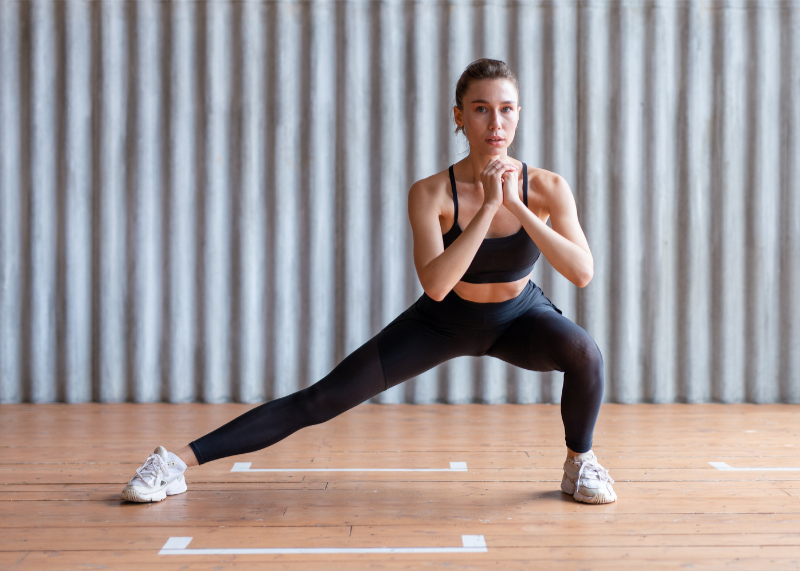
For example, depending on the individual, exercises such as split squats, lateral lunges, Romanian deadlifts and controlled squat variations can simultaneously develop strength and usable mobility.
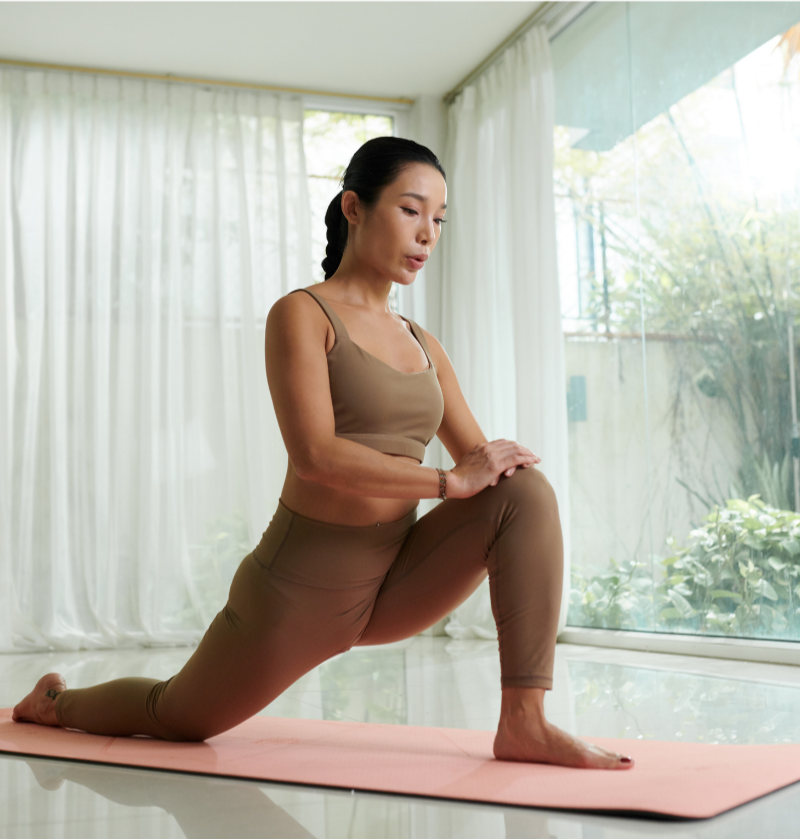
This is one reason our Personal Training in Toronto approach emphasizes movement quality alongside progressive strength training.
When Hip Tightness Becomes Hip Pain
Feeling stiff is different from experiencing persistent pain.
Consider having your hip assessed if you experience:
Sharp or persistent hip pain
Repeated pinching at the front of the hip
Groin pain during squats
Significant loss of range of motion
Pain that worsens as training continues
Symptoms that repeatedly return despite modifying your workouts
Instead of continuing to stretch an irritated area, identifying what is contributing to the symptoms can guide a more appropriate treatment and training plan.
How Physiotherapy Can Help Lifters with Hip Mobility
A physiotherapist can evaluate whether your perceived hip restriction is related to mobility, strength, pain, movement control or another factor.
At Catalyst Health, Physiotherapy in Toronto may include:
Hip and lower-extremity assessment
Movement and squat assessment
Manual therapy when appropriate
Mobility exercises
Progressive strengthening
Load management
Return-to-lifting programming
The objective isn't simply to increase range of motion. It's to restore the movement and capacity you need for your training.
Chiropractic Care and Hip Mobility
Hip movement doesn't occur in isolation.
The pelvis, lumbar spine and surrounding joints all contribute to lower-body movement.
Our Chiropractic Services can assess joint mobility and musculoskeletal function throughout the kinetic chain and incorporate manual treatment and exercise when appropriate.
For active clients, chiropractic care can also be integrated with rehabilitation and strength training rather than used as a standalone solution.
Sports Rehab: From Pain Back to Performance
One of the most important stages of recovery occurs after pain begins to improve.
Can you squat again?
Can you deadlift?
Can you tolerate progressively heavier loads?
Our Sports Injury Rehab programs help bridge the gap between treatment and returning to full training.
Rehabilitation may progress from restoring comfortable movement to rebuilding strength and gradually reintroducing the loads and exercises that matter to you.
Can Better Hip Mobility Improve Your Lifting?
Potentially—but more mobility isn't always better.
The goal is to have the appropriate mobility for your sport or activity and the strength to control it.
For a lifter, improving a meaningful restriction may help with:
Squat positioning
Comfortable depth
Hip-hinge mechanics
Exercise selection
Training consistency
But if you already have sufficient mobility, spending additional time stretching may provide little benefit. Strength, technique or programming could be the more important area to address.
Hip Mobility and Performance in Toronto
If you train regularly at a gym in Toronto, mobility shouldn't be treated as something separate from strength training.
It should support what you're trying to accomplish.
At Catalyst Health in Yorkville, Toronto, our integrated team works with active adults, recreational athletes and lifters through:
Physiotherapy
Chiropractic care
Sports injury rehabilitation
Personal training
Recovery services
This allows treatment, rehabilitation and strength training to work together instead of existing as separate pieces of your program.
Stop Guessing Why Your Hips Feel Tight
If you're constantly stretching your hips but they still feel restricted every time you squat, the answer may not be "more stretching."
A proper assessment can determine whether mobility is the limiting factor and identify the most appropriate next step.
If hip stiffness, pain or limited movement is interfering with your training, Book an Assessment with the Catalyst Health team in Toronto.
We'll help you identify what's limiting your movement and develop a plan to get you back to training confidently.
Frequently Asked Questions
How can I improve hip mobility for squats?
Start by determining what's limiting your squat. Hip or ankle mobility, strength, technique and individual anatomy can all affect squat depth and positioning. Targeted mobility combined with strength through the available range is often more useful than stretching alone.
Why do my hips feel tight after lifting?
Temporary stiffness can occur after demanding training. Persistent tightness may also relate to training load, mobility limitations, strength or movement patterns. If it repeatedly interferes with training or is accompanied by pain, consider an assessment.
Should I stretch my hips every day?
Not necessarily. Mobility work can be performed regularly, but frequency should depend on your needs. If you already have sufficient mobility for your activities, additional stretching may not provide meaningful benefits.
Can physiotherapy help with hip pain from squatting?
Yes. Physiotherapy can assess mobility, strength, movement patterns and training load to determine what may be contributing to symptoms and create an individualized rehabilitation plan.
Should I stop squatting if my hip hurts?
It depends on the nature and severity of your symptoms. You may be able to modify the range, load, stance or exercise while addressing the underlying issue. Persistent, worsening or significant pain should be assessed by a qualified healthcare professional.